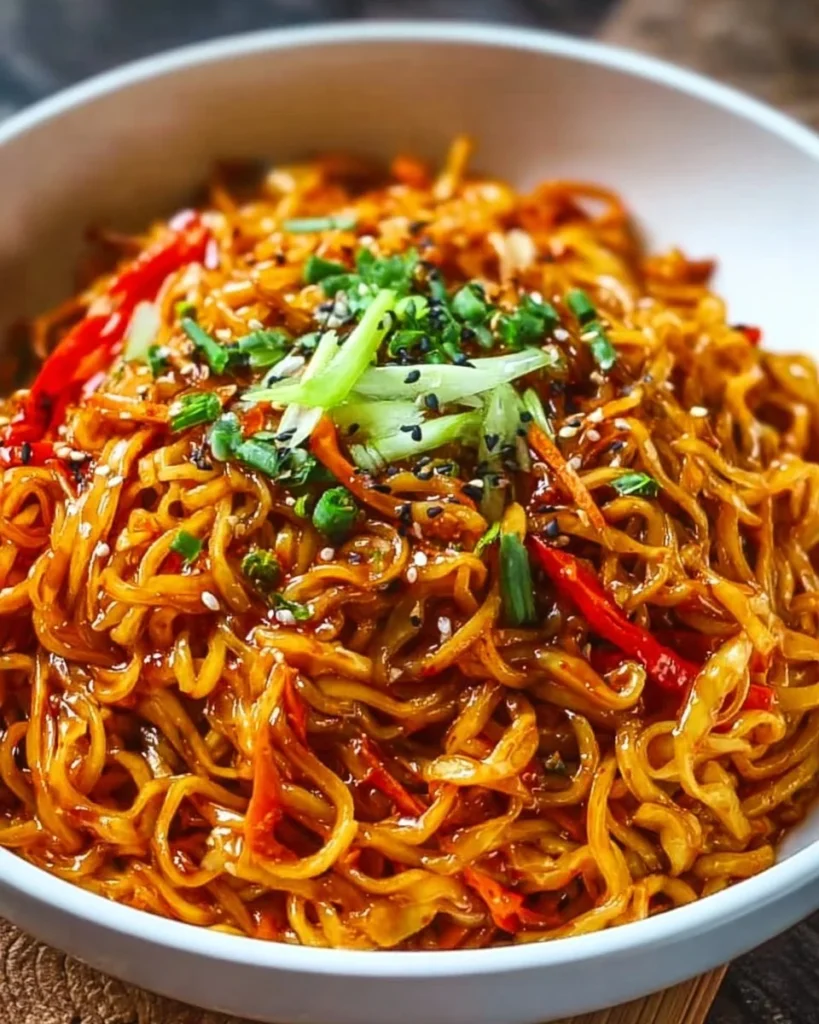
Immerse yourself in the mouthwatering experience of Sweet and Spicy Korean Gochujang Noodles, where every bite takes you on a vibrant journey through the lively streets of South Korea. Picture this: you twirl your fork around delicate, chewy rice noodles enveloped in a luscious sauce that dances tantalizingly between sweet and spicy. Each forkful bursts with an intricate mosaic of flavors—the deep umami from Gochujang, the zing of fresh lime, and a hint of sweetness that lingers just enough to entice your taste buds. Meanwhile, the crisp textures of fresh bell peppers and cabbage provide a crunchy contrast that elevates the dish into a delightful sensory experience.
As you bring the noodles to your lips, the aroma wafts into the air, painting the scene with a symphony of savory scents that beckon you closer. Imagine the gleaming sheen of sesame oil coating each strand, the warm effervescence of garlic melding seamlessly with the rich, bold flavors in the sauce. Your mouth waters at the thought of devouring this aromatic dish, making it impossible to resist a second helping—or a third! Whether it’s a casual weeknight dinner or a lively gathering with friends, these noodles embody the spirit of togetherness and satisfaction that great food promises.
Why You’ll Love This Sweet And Spicy Korean Gochujang Noodles Recipe
With a blend of rich flavors and delightful textures, this recipe truly stands out. The Gochujang paste, rich in fermentative depth, offers that iconic Korean flavor which instantly transforms simple ingredients into a culinary masterpiece. The creamy and spicy balance resonates perfectly with the warmth of homemade meals shared among friends and family. Plus, it’s quick to whip up, ideal for those bustling weeknights when cooking feels like a daunting task.
Serving these noodles at your next get-together turns into an experience! Guests will be captivated not only by the eye-catching presentation but also by the explosion of flavors that leave them craving more. This dish easily adapts to celebrate any occasion, from cozy family dinners to vibrant summer barbecues. With a dash of creativity, they can be customized to suit various dietary preferences, guaranteeing that everyone at the table will savor this culinary gem.
Preparation Phase & Tools to Use
Before diving into the captivating world of flavors and textures, having the right tools will streamline your culinary adventure. Each tool plays a crucial role in crafting perfect noodles that delight the senses:
- Large Pot: Essential for boiling the rice noodles. The roomy space allows for even cooking without sticking—a must for achieving perfectly tender noodles.
- Wok or Large Skillet: Ideal for quickly tossing your noodles with the vibrant sauce and vegetables. The high heat cooks everything efficiently, giving that irresistible stir-fried flavor.
- Measuring Spoons: Precision ensures the balance of flavors. A dash more Gochujang can take your dish from delicious to extraordinary.
- Chef’s Knife: For smoothly slicing your vegetables into the ideal julienne shape, enhancing both their aesthetic appeal and bite.
Preparation Tips:
- Prep Your Vegetables First: Slicing your bell peppers, carrots, and cabbage beforehand saves time and helps ensure even cooking.
- Boil the Noodles Al Dente: Under-cook your noodles slightly so they absorb the flavors of the sauce without becoming mushy later.
Ingredients for Sweet And Spicy Korean Gochujang Noodles
Gather the following ingredients to bring this dish to life, and consider the possibilities of substitutions for a personalized experience:
- 8 ounces uncooked rice noodles (250 g): Use gluten-free alternatives if needed, like rice vermicelli, for a delightful twist.
- 3 tablespoons Gochujang paste: This Korean chili paste introduces the quintessential sweetness and spiciness.
- 3 tablespoons Hoisin sauce: Offers a complex sweetness that balances the heat.
- 2 tablespoons dark soy sauce: Adds depth and a touch of saltiness to the dish.
- 3 tablespoons lime juice: Brightens the flavors and cuts through the richness.
- 2 tablespoons sesame oil: Imparts a rich, nutty aroma that complements the other ingredients.
- 1 tablespoon minced garlic: Brings warmth and aromatic depth.
- 1 teaspoon brown sugar: Enhances the sweetness and rounds out the heat.
- 1 tablespoon vegetable oil: Useful for sautéing to prevent sticking and achieve that delicious stir-fry sear.
- ½ cup thinly sliced mixed bell peppers: Adds color, sweetness, and a pleasant crunch against the soft noodles.
- 1 cup shredded cabbage: Contributes an excellent textural contrast and playful freshness.
- ½ cup shredded carrots: A crunchy, sweet bite that complements the others beautifully.
How to Make Sweet And Spicy Korean Gochujang Noodles
Crafting this dish entails three straightforward stages: cooking the noodles, assembling the sauce, and bringing it all together for a delightful final product.
Cook The Noodles
- Bring a large pot of water to a rolling boil. Add the rice noodles and cook until al dente, following the package instructions—usually about 4-6 minutes.
- Taste the noodles to ensure they are just tender but still have a slight bite.
- Drain and rinse under cold water to halt the cooking process, ensuring they maintain their perfect texture. Set aside.
Make The Sauce
- In a mixing bowl, whisk together the Gochujang paste, Hoisin sauce, dark soy sauce, lime juice, sesame oil, minced garlic, and brown sugar. Stir until the mixture is smooth and well combined. You should have a vibrant red sauce thick enough to coat.
Make The Noodles
- Heat a wok or large skillet over medium-high heat. Add the vegetable oil, swirling it to coat the pan.
- Toss in the bell peppers and shredded cabbage, stirring frequently. Sauté until they become slightly soft but still vibrant—about 2-3 minutes.
- Introduce the cooked noodles to the skillet and pour in the sauce, tossing everything together until well coated and heated through. If needed, add a splash of water to loosen the sauce for better coverage.
- Serve immediately, garnished with sesame seeds or chopped scallions if desired.
Chef’s Notes & Helpful Tips
- Make-Ahead Tips: The sauce can be prepared in advance and stored in an airtight container in the fridge for up to a week, making it an ideal meal prep solution.
- Cooking Alternatives: For a smoky twist, consider roasting the vegetables in the oven or grilling them to enhance their natural sweetness and add depth to the dish.
- Customization Ideas: Experiment with different vegetables based on seasonal availability. Broccoli, snap peas, or even zucchini would work wonders in this dish! For additional protein, toss in some grilled chicken, shrimp, or tofu.
Common Mistakes to Avoid
- Overcooking the Noodles: Always monitor the cooking time. Overcooked noodles turn mushy and lose their appealing texture.
- Not Rinsing the Noodles: Rinsing prevents noodles from sticking together. Skipping this step can result in clumping.
- Neglecting to Taste: Always taste your sauce before adding it to the noodles. Adjust sweetness or spice levels to suit your personal preference.
What to Serve With Sweet And Spicy Korean Gochujang Noodles
Enhance your culinary spread with delightful pairings that complement the rich symphony of flavors in this dish:
- Grilled Korean Chicken Thighs: Juicy and marinated, they bring depth and additional umami to your meal.
- Crispy Tofu Skewers: Pan-fried or air-fried tofu adds protein and a lovely crunch that contrasts beautifully.
- Kimchi: The tangy, fermented cabbage elevates your meal, bringing a hint of sourness against the noodle’s sweetness.
- Pickled Vegetables: A brisk, vinegary bite cleanses the palate and balances richness.
- Steamed Broccoli with Sesame Seeds: Adds a crisp green element while enhancing the dish’s overall appeal.
- Edamame: Nutritious and lightly salted, they offer a delightful snacking option that pairs well with the noodles.
- Korean Fried Rice: An excellent side dish to complete your Korean-inspired feast with additional hearty flavors.
- Miso Soup: Provides a warm start or finish to your meal, balancing the meal’s sweet and spicy notes.
Storage & Reheating Instructions
Store leftover noodles in an airtight container in the refrigerator for up to 3 days. For optimal flavor and texture, reheat the noodles in a skillet over medium heat, adding a splash of water to prevent sticking. If you prefer, microwave them in a covered bowl until heated through.
For longer storage, freeze the noodles and sauce in separate containers for up to 1 month. When ready to enjoy, thaw overnight in the fridge before reheating as described.
Estimated Nutrition Information
While exact values vary based on precise ingredients and portion sizes, here’s a rough estimate for one serving:
- Calories: 320
- Protein: 8g
- Carbohydrates: 65g
- Fat: 6g
- Fiber: 4g
- Sugar: 7g
These values serve only as a guide, and modifications like added proteins or extra vegetables can alter the nutritional profile.
FAQs
1. Can I make these noodles vegetarian-friendly?
Absolutely! Use hoisin sauce that is vegetarian, and add veggies as your protein source, like tofu or tempeh, for a delightful and nutritious meal.
2. How spicy is Gochujang compared to other chili sauces?
Gochujang balances sweetness, spice, and savory umami. While it has a noticeable kick, it’s generally milder than fresh chilies, making it suitable for many palettes.
3. Can I use other types of noodles?
While rice noodles boast the best texture for this recipe, you can experiment with udon or soba noodles. However, adjust cooking times as needed, since they differ in texture and firmness.
4. Does this dish taste good cold?
Yes! While these noodles shine when served hot, they can be enjoyed cold as a unique noodle salad—perfect for summer picnics.
5. What if I can’t find Gochujang?
In a pinch, you can create a substitute by combining miso paste with a pinch of chili flakes and a touch of honey or maple syrup. It won’t be an exact match but will provide a sweet-spicy flavor.
With every aspect coming together to create a sensational dish, Sweet and Spicy Korean Gochujang Noodles promise to be a hit at your dining table. The crunchy vegetables, the chewy noodles, and the bold sauce make this dish a delightful experience that has the power to transport you to another world, even if just for the duration of your meal. So grab your wok, embrace the vibrant flavors, and bring this delicious recipe to life. You won’t regret it. Enjoy every savory bite!
Print
Sweet and Spicy Korean Gochujang Noodles
- Total Time: 25 minutes
- Yield: 4 servings 1x
- Diet: Vegetarian
Description
Immerse yourself in a delightful blend of sweet and spicy flavors with these Korean Gochujang noodles, featuring chewy rice noodles and vibrant vegetables.
Ingredients
- 8 ounces uncooked rice noodles (250 g)
- 3 tablespoons Gochujang paste
- 3 tablespoons Hoisin sauce
- 2 tablespoons dark soy sauce
- 3 tablespoons lime juice
- 2 tablespoons sesame oil
- 1 tablespoon minced garlic
- 1 teaspoon brown sugar
- 1 tablespoon vegetable oil
- ½ cup thinly sliced mixed bell peppers
- 1 cup shredded cabbage
- ½ cup shredded carrots
Instructions
- Bring a large pot of water to a rolling boil. Add the rice noodles and cook until al dente, usually about 4-6 minutes.
- Taste the noodles to ensure they are just tender but still have a slight bite.
- Drain and rinse under cold water to halt the cooking process, then set aside.
- In a mixing bowl, whisk together the Gochujang paste, Hoisin sauce, dark soy sauce, lime juice, sesame oil, minced garlic, and brown sugar until smooth.
- Heat a wok or large skillet over medium-high heat. Add the vegetable oil, swirling to coat the pan.
- Toss in the bell peppers and shredded cabbage; sauté until slightly soft—about 2-3 minutes.
- Add the cooked noodles to the skillet and pour in the sauce, tossing to coat until heated through.
- Serve immediately, garnished with sesame seeds or chopped scallions if desired.
Notes
The sauce can be made ahead and stored in the fridge for up to a week. For added flavor, you can grill or roast the vegetables instead of sautéing them.
- Prep Time: 15 minutes
- Cook Time: 10 minutes
- Category: Main Course
- Method: Stir-frying
- Cuisine: Korean
Nutrition
- Serving Size: 1 serving
- Calories: 320
- Sugar: 7g
- Sodium: 600mg
- Fat: 6g
- Saturated Fat: 1g
- Unsaturated Fat: 5g
- Trans Fat: 0g
- Carbohydrates: 65g
- Fiber: 4g
- Protein: 8g
- Cholesterol: 0mg
Keywords: Korean noodles, Gochujang noodles, vegetarian noodles, spicy noodles, quick dinner