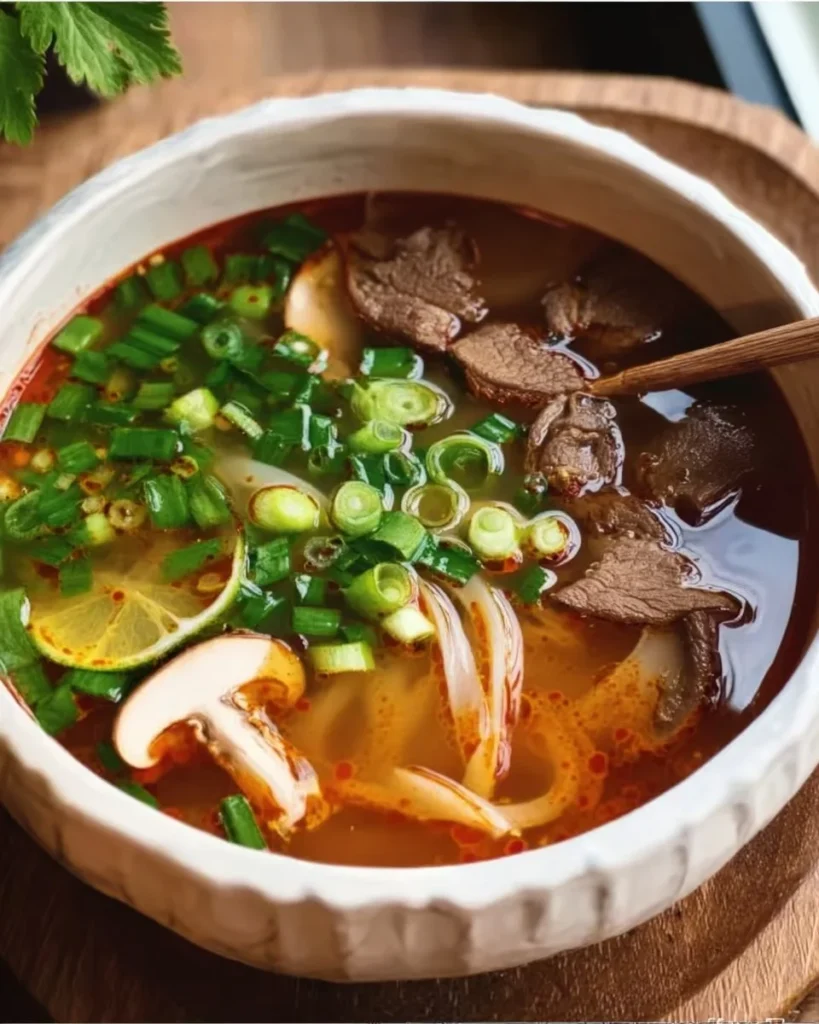
There’s nothing quite like a steaming bowl of homemade soup to wrap around you like a warm blanket on a chilly day. Imagine the fragrant aroma wafting through your kitchen, tantalizing your senses and luring everyone to the table with the promise of comfort and nourishment. As the rich, savory broth simmers away, the vibrant colors of fresh vegetables and herbs come alive, transforming the pot into a vibrant work of art. Each spoonful delivers a symphony of flavors, harmonizing the earthy notes of spices with the sweetness of tender vegetables and the depth of savory broth. You can almost taste the warmth radiating from the bowl, inviting you to take one more sip, one more bite, enveloping you in pure satisfaction.
This delightful Asian-inspired soup not only fills your belly but also nourishes your soul. It carries the warmth of home-cooked meals, echoing memories of family gatherings and the joy of sharing good food with loved ones. Every time you take a spoonful, you feel embraced by its creamy texture, while the crunch of fresh herbs cuts through the richness, creating a perfect balance. It’s no wonder this dish has garnered a reputation for being both healthy and delicious, showing us that comfort food can indeed be wholesome.
Why You’ll Love This Asian-Inspired Soup
Prepare to fall head over heels for this soup, where deliciousness meets health benefits at every turn. Brimming with wholesome ingredients, it offers a nutritious profile that energizes and excites. The subtle warmth from ginger and garlic boosts your immune system, while vibrant vegetables add a bounty of vitamins and minerals. Not only does the soup taste fantastic, but it’s also an incredibly versatile dish that easily adapts to any occasion—family dinners, cozy evenings, or even casual lunch meetings.
Its standout quality lies in its ability to surprise your palate with complex flavors and textures. The creamy cocoon of the broth envelops crunchy vegetables and silky noodles or grains, creating a delightful contrast that keeps each bite exciting. You’ll find yourself transported—savoring the exotic blend of spices that makes this dish not just a meal, but a culinary adventure.
Preparation Phase & Tools to Use
Creating this comforting soup isn’t complicated, but having the right tools on hand makes the process smoother and more enjoyable.
- Large Pot or Dutch Oven: A heavy-bottomed pot retains heat and distributes it evenly, essential for flavor development as the soup simmers.
- Knife & Cutting Board: A sharp chef’s knife ensures precise chopping, helping cooks unleash the fresh flavors of the vegetables without bruising them.
- Whisk: A whisk comes in handy for blending ingredients seamlessly, especially if you’re incorporating a roux or thickening agent to achieve a creamy texture.
- Ladle: This tool not only serves soup with ease but also allows you to gorgeously fill bowls, making the dish feel even more special for your family or guests.
Preparation tips include prepping all your ingredients before starting to cook. A little mise en place can save you time and stress, ensuring your cooking experience remains enjoyable and relaxed.
Ingredients for Asian-Inspired Soup
The heart of any soup lies in its ingredients, and this one is no different. Here’s what you’ll need:
- Broth: Fresh homemade broth is ideal, but store-bought options can save time. Choose low-sodium varieties to maintain control over salt levels.
- Vegetables: Carrots, bok choy, and bell peppers are classics, but feel free to add mushrooms, zucchini, or any vegetables you have on hand.
- Proteins: Tofu, chicken, or shrimp work beautifully. For a vegetarian option, opt for chickpeas or lentils.
- Grains or Noodles: Add depth by incorporating rice, quinoa, or rice noodles. They soak up the broth beautifully, creating a hearty dish.
- Seasonings: Fresh herbs like cilantro and basil bring brightness, while soy sauce, ginger, and garlic infuse layers of umami.
If you’re missing any of these, don’t hesitate to experiment with what you have, keeping the spirit of this dish alive.
How to Make Asian-Inspired Soup
-
Prepare Your Ingredients: Begin by washing and cutting your vegetables into bite-sized pieces. Chop or cube your protein source, ensuring even cooking.
-
Sauté Aromatics: In your pot, heat a drizzle of oil over medium heat. Add minced garlic and grated ginger, stirring until fragrant—this usually takes about one minute.
-
Cook the Vegetables: Toss in your hardier vegetables first (like carrots) and cook for 5-7 minutes until they soften. Then add softer veggies (like bell peppers and bok choy), sautéing for an additional 3 minutes.
-
Add the Broth: Pour in your broth and stir to combine. Bring the mixture to a gentle simmer, allowing the flavors to meld beautifully.
-
Add Proteins & Grains: After about 10 minutes of simmering, introduce your protein source and grains or noodles. Continue simmering until they are cooked through—approximately 10-15 minutes more.
-
Adjust Seasonings: Taste your soup and adjust salt and pepper as necessary. For an extra layer of flavor, add a splash of soy sauce or a sprinkle of sesame oil.
-
Finalize with Fresh Herbs: Just before serving, throw in fresh herbs for a burst of flavor and color.
Chef’s Notes & Helpful Tips
- Make-Ahead Tips: This soup freezes beautifully, allowing you to enjoy its flavors any time. Make a big batch and portion it out for easy meals later on.
- Cooking Alternatives: While stovetop cooking offers deep flavor, consider making this soup in an Instant Pot, which will drastically reduce cooking time while infusing flavors quickly.
- Customization Ideas: Feel free to switch up the flavors—add chili flakes for heat, or try different herbs like mint for a refreshing twist.
Common Mistakes to Avoid
Every kitchen adventure has its pitfalls, but a few common mistakes can make a huge difference:
- Overcooking Vegetables: Aim for vibrant, slightly crisp vegetables for the best texture. Under-cook them slightly as they will continue to soften in the broth.
- Not Seasoning Enough: Don’t forget to season at each stage of cooking. This enhances flavor layers, creating a more immersive eating experience.
- Skipping the Resting Step: Allow your soup to sit off heat for a few minutes before serving. This resting time lets the flavors deepen and meld beautifully.
What to Serve With Asian-Inspired Soup
Enhancing your dining experience is just as important as the soup itself. Here are some delightful pairings:
- Crusty Bread or Baguette: Perfect for dipping and soaking up every drop of the delicious broth.
- Steamed Dumplings: Add a delightful textural contrast and a hint of indulgence.
- Rice Paper Rolls: These fresh rolls offer a crisp bite, providing a fun, interactive dining experience.
- Green Salad with Sesame Dressing: The light and zesty notes complement the hearty soup wonderfully.
- Pickled Vegetables: Their tangy crunch cuts through the richness beautifully.
- Egg Fried Rice: A hearty side that enhances the meal’s comfort factor.
- Spring Rolls: Crispy outside, filled with fresh herbs—an exciting addition to your spread.
Storage & Reheating Instructions
Storing your soup is straightforward. Pour leftovers into airtight containers and refrigerate for 3-4 days. If you need to store it longer, transfer it to the freezer, where it can last up to 3 months. To reheat, simply defrost overnight in the refrigerator and warm it gently on the stove or in the microwave, stirring frequently to maintain its creamy texture.
Estimated Nutrition Information
Each hearty serving of this Asian-inspired soup packs a punch, providing approximately:
- Calories: 250-300
- Protein: 15-20g
- Carbohydrates: 35-40g
- Fat: 8-12g
- Fiber: 5-7g
(These values may vary based on ingredients used; always adjust according to your specific batch.)
FAQs
Can I make this soup vegetarian or vegan?
Absolutely! Just swap the broth for a vegetable base, use tofu or chickpeas as your protein, and opt for plant-based noodles.
What if I don’t have fresh herbs?
Dried herbs are fine in a pinch; just use them sparingly. Fresh herbs, however, offer unparalleled brightness and aroma.
Can I use frozen vegetables?
Yes! Frozen vegetables can work well; add them directly to the pot while cooking. They may require a bit longer to cook through.
Is this soup gluten-free?
Yes, provided you use gluten-free broth and noodles. Always check labels to ensure all ingredients meet your dietary requirements.
Can I add more spices for a kick?
Definitely! Feel free to add chili oil, sriracha, or crushed red pepper flakes for heat. Just be careful and start with small amounts.
Conclusion
In a world bursting with flavors and culinary possibilities, this Asian-inspired soup stands out as a beacon of comfort and nourishment. From its inviting aroma to its rich, authentic taste, it transforms every meal into a harmonious experience that you’ll crave again and again. So put on your apron, gather your favorite ingredients, and let the magic of cooking fill your kitchen with warmth and delight. You’ll not only savor the food but also create cherished moments around the table, proving that every bowl truly tells a story worth sharing. Go ahead—give this recipe a try, and let your taste buds embark on a delightful journey.
Print
Asian-Inspired Soup
- Total Time: 45 minutes
- Yield: 4 servings 1x
- Diet: Vegetarian
Description
A creamy and nutritious soup filled with vibrant vegetables, spices, and flavors that envelop you in warmth.
Ingredients
- 4 cups low-sodium broth
- 1 cup carrots, chopped
- 1 cup bok choy, chopped
- 1 cup bell peppers, chopped
- 1 cup mushrooms, chopped (optional)
- 1 cup diced tofu or protein of choice
- 1 cup rice, quinoa, or rice noodles
- 2 cloves garlic, minced
- 1 inch ginger, grated
- 2 tablespoons soy sauce
- Fresh herbs (cilantro, basil) for garnish
- Salt and pepper to taste
Instructions
- Prepare your ingredients: Begin by washing and cutting your vegetables into bite-sized pieces. Chop or cube your protein source, ensuring even cooking.
- Sauté aromatics: In your pot, heat a drizzle of oil over medium heat. Add minced garlic and grated ginger, stirring until fragrant—this usually takes about one minute.
- Cook the vegetables: Toss in your hardier vegetables first (like carrots) and cook for 5-7 minutes until they soften. Then add softer veggies (like bell peppers and bok choy), sautéing for an additional 3 minutes.
- Add the broth: Pour in your broth and stir to combine. Bring the mixture to a gentle simmer, allowing the flavors to meld beautifully.
- Add proteins & grains: After about 10 minutes of simmering, introduce your protein source and grains or noodles. Continue simmering until they are cooked through—approximately 10-15 minutes more.
- Adjust seasonings: Taste your soup and adjust salt and pepper as necessary. For an extra layer of flavor, add a splash of soy sauce or a sprinkle of sesame oil.
- Finalize with fresh herbs: Just before serving, throw in fresh herbs for a burst of flavor and color.
Notes
This soup freezes beautifully, allowing you to enjoy its flavors any time. Make a big batch for easy meals later on. Customize with additional spices or vegetables as desired.
- Prep Time: 15 minutes
- Cook Time: 30 minutes
- Category: Soup
- Method: Stovetop
- Cuisine: Asian
Nutrition
- Serving Size: 1 serving
- Calories: 275
- Sugar: 4g
- Sodium: 500mg
- Fat: 10g
- Saturated Fat: 1g
- Unsaturated Fat: 9g
- Trans Fat: 0g
- Carbohydrates: 38g
- Fiber: 6g
- Protein: 16g
- Cholesterol: 0mg
Keywords: soup, Asian, healthy, vegetarian, comfort food, quick meal